Jan 16, 2024 | What Sets Us Apart
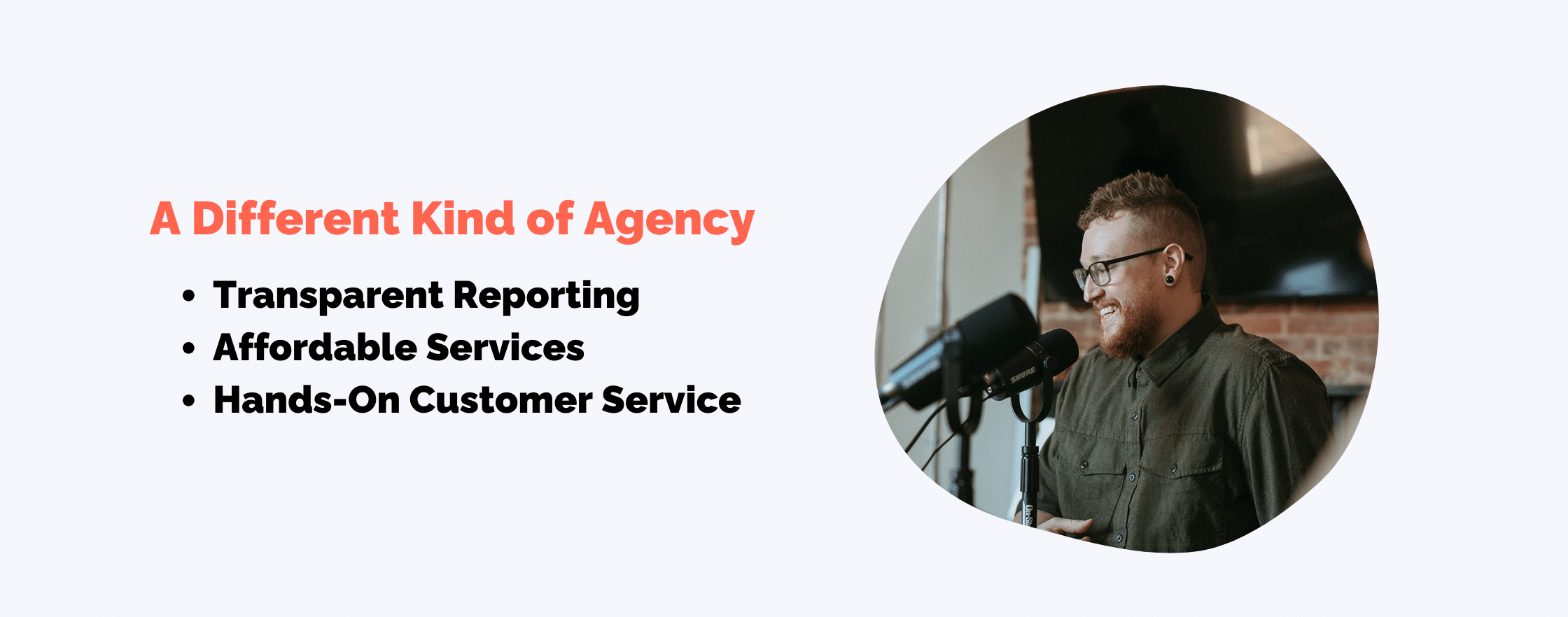
A common complaint that clients share with us about their past experiences with our competitors is that these developers and agencies were not clear about their prices– or that the services they received were not consistent with the investment they made. Harris & Ward is not only committed to price transparency, but offering a flexible range of services to fit a variety of client needs.
Our dedication to this principle starts with showing you our clear advantage, providing you with a comparative analysis between our pricing and that of our competitors. Whereas these competitors may engage in deceptive practices like hidden fees and marking up their prices to give the illusion of better results– results they won’t show you, at that– Harris & Ward offers a tiered pricing system that helps you choose the services that you need and avoid the added cost of ones you don’t. By offering different options tailored to a range of different needs, you can be assured of the return on investment you’ll receive. When taking the cost-benefit analysis into consideration, you may find that competitors are charging you for what amounts to ‘fluff’, offering plenty of compelling buzzwords but keeping their development process and quantitative results under wraps.
Harris & Ward is different. We show you real data that speaks to our real advantage, building upon the success we’ve helped numerous clients achieve with dependable, creative strategies. From there, we work with you to build the perfect plan going forward. We want to understand your story, the core philosophies of your organization, the unique perspective of your audience, and every other piece of the puzzle that comes together to form the right digital marketing strategy. We offer affordable, competitive prices because we have the expertise to provide fast, efficient project turnaround and get your website up and running its best. We also take the time to help doctors, dentists, orthodontists, veterinarians, small business owners– clients of all backgrounds– understand the industry standards for web development and digital marketing so that everyone can feel empowered to make an informed decision.
If you’re looking for a digital marketing agency with extensive experience and proven success, or simply frustrated with our competitors’ vague, expensive prices for services that don’t suit your specific needs, it might be time to get in contact with Harris & Ward. We do more than just create stunning websites with powerful SEO data helping put you a step above your competitors– we want to help you tell your story. Get in touch with us today for more information on how our team can make your vision for a strong online presence a reality, all while ensuring you have a plan that fits your small business budget.
Jul 24, 2023 | Harris & Ward, Web Design
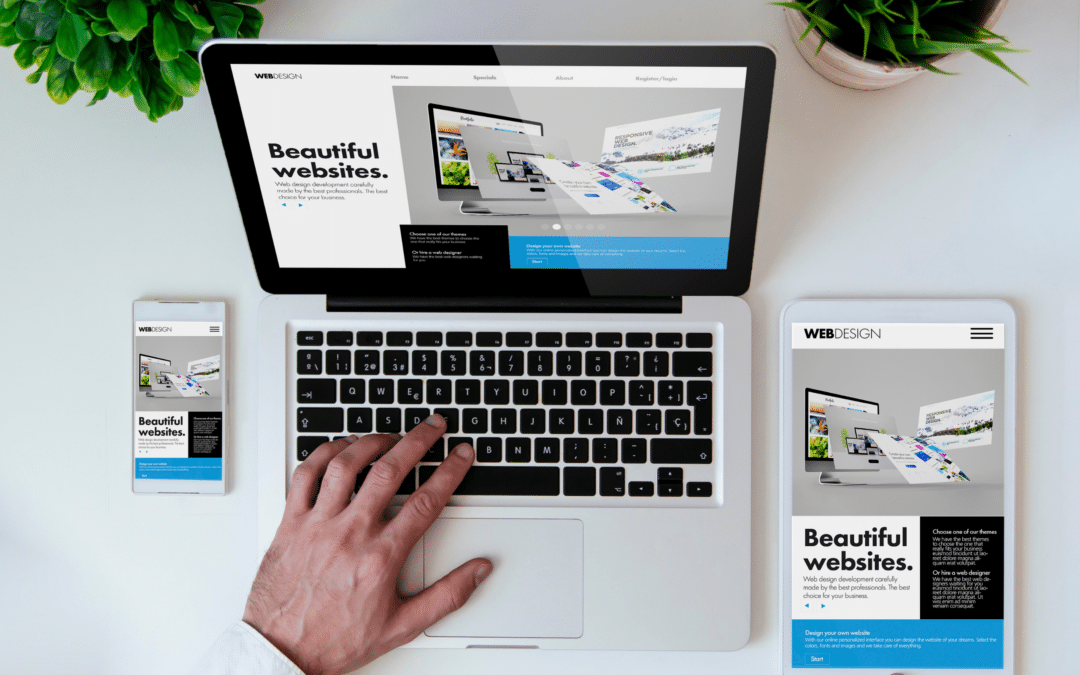
In today’s digital age, having a strong online presence is crucial for the success of any business. A well-designed website serves as a virtual storefront, allowing potential customers to explore your products or services and learn more about your brand. If you’re ready to take your business online and create a website, this guide will walk you through the essential first steps to get started.
Establishing Your Goals For Your Website
Before diving into the website creation process, it’s essential to establish clear goals and objectives for your website. Ask yourself what you want to achieve with your online presence. Are you looking to generate leads, sell products directly, provide information, or establish your brand identity? Understanding your goals will help us shape the overall design and functionality of your website.
How Will You Structure & Design Your Website?
Organizing your website’s structure and navigation is also vital for user experience. Start by creating a sitemap that outlines the main sections and pages of your website. This may look different for everyone depending on your business. For example, a dental website sitemap could have pages that outline different treatment options, a staff page to meet the dentists, and a page with information on how to schedule an appointment. Different types of websites will have different pages and sections. It’s important to consider how you want your visitors to navigate through your content, ensuring it is intuitive and easy to follow. A well-structured website makes it effortless for users to find the information they are seeking.
The design of your website plays a significant role in attracting and retaining visitors. Create a visually appealing and user-friendly interface that aligns with your brand identity. Choose a color scheme, typography, and imagery that convey the right message and appeal to your target audience. Keep the design clean, consistent, and intuitive, ensuring effortless navigation and readability across devices.When meeting with clients to work on the design of a website, we start by asking if they already have a branding package. If the client only has a logo, we use their logo to pull colors and create a palette with 5-6 colors. Different colors evoke specific emotions and associations. For example, warm tones like red and orange can convey energy and passion, while cool blues and greens evoke a sense of calmness and tranquility. Understanding the psychological impact of colors helps in aligning the color scheme with the intended message and brand identity. Clients are given two options of color palettes to choose from to represent their brand.
Clients are also sent an on-boarding form when we start a project and this asks questions about the design and feel of the site. Some of the questions we ask clients are: Do you have any branding for your business? Will a logo revision be needed? Do you have any recent photography from the past 5 years? What is the primary goal of your website? Is there a design theme to your office or branding? Do you gravitate towards vibrant colors or neutral colors? Do you have a tagline? Are there any websites that you love? etc. These questions allow us to inform decisions for the design.
Fonts are usually determined by the feedback given on the on-boarding form. Mood boards can also be created to help get the look and feel clients are looking for nailed. A well-crafted mood board should evoke a specific mood or atmosphere. Consider the emotions you want your website visitors to experience. Do you aim for a vibrant and energetic vibe, or a calm and serene ambiance? Select images and colors that align with the desired emotional response.
Design styles are really important because different styles can portray the type of business you are and the message you are trying to convey to your customers. Some clients may want a website with a more professional feel versus others who may want a funky vibe. This can all be conveyed on a website through the color scheme, typography and branding. Design styles on websites act as a language, speaking to visitors and conveying messages beyond words. By carefully selecting a design style that aligns with your brand’s values, target audience, and intended message, you can create a visually compelling website that captivates users, communicates effectively, and leaves a lasting impression. Since this is so important, we work with clients to determine exactly what they are looking for during the on-boarding and design process.
Now It’s Time To Build Your Dream Website
After collecting this information about your design and layout, our production team will begin the wire-framing process. Wireframes serve as a skeletal representation of your website’s structure and layout. They focus on organizing content, determining page hierarchy, and mapping out navigation. Wireframes are typically created to allow you to visualize the website’s structure without getting distracted by visual design elements.
Once the wireframe is approved, we will proceed to the design phase, where we will work with developers to transform the wireframe into a visually appealing and interactive mockup. They will create a comprehensive representation of how your website will look and function. The mockup will showcase the website’s color scheme, typography, imagery, and other visual elements, allowing you to envision the final product. We also offer professional photography and videography for small businesses so your website can have pictures and videos that show off your company.
The mockup is not a final product but rather a starting point for collaborative feedback and refinement. Our team will share the mockup with you, seeking your input and suggestions. Your feedback is crucial in this stage as it ensures the design aligns with your expectations and preferences. Together, we will make necessary revisions and adjustments until it accurately represents your desired website design.
After multiple rounds of feedback and refinement, we will present the finalized mockup for your approval. Once you are satisfied with the design and functionality, we will build out your site with our content writers and web developers.
Prioritizing The User Experience On Your Website
Before launching your site, we will do testing to make sure everything is user-friendly and technically sound. In addition, our website hosting service offers routine maintenance checks to keep your site live and secure and make sure everything is working correctly. We monitor website performance, uptime, and speed, addressing any issues promptly. Regular backups and security checks are conducted to safeguard your website and protect it from potential threats. Additionally, we stay on top of software updates, ensuring that your website is running on the latest versions of content management systems, plugins, and other essential components.
After creating your website, our agency also performs search engine optimization (SEO) maintenance. We conduct keyword research, analyze website analytics, and optimize meta tags, headings, and content to ensure that your website is easily discoverable by search engines. By staying on top of algorithm changes and best practices, they help your website maintain a competitive edge in search rankings.
Looking For A Website To Match the Quality of Your Business?
Our company offers website design for a variety of clients including dentists, orthodontists, chiropractors, optometrists, financial advisors, and many more small businesses. Our team creates affordable websites and provides video and photography services to get your website started. If your business is seeking a new website, visit our website to get started!
Top 6 Elements of Great Web Design

Mar 28, 2023 | Facebook, Social Media
Using Meta Ads (Facebook and Instagram) for Digital Storytelling
Digital Storytelling in 2023
Storytelling has been an essential part of human communication since ancient times. It’s a way to convey ideas, emotions, and experiences through a narrative that captures the audience’s attention. With the rise of the internet and social media, storytelling has evolved into a digital medium, and it’s becoming more crucial for businesses to tell their stories in a captivating way.
In 2023, digital storytelling is more important than ever. With the pandemic still affecting how we interact with the world, people are spending more time online. As a result, businesses need to create content that stands out in the digital space, and digital storytelling can help achieve that.

Are Meta Ads or Organic Positions best for Storytelling?
When it comes to digital storytelling, businesses have two options: organic positions or paid advertising, specifically, meta ads on Facebook and Instagram. Organic positions refer to the placement of content on a platform without paying for advertising. On the other hand, meta ads are sponsored posts that appear on users’ feeds.
While organic positions can be effective, meta ads offer several advantages for digital storytelling. First, meta ads allow businesses to target specific audiences based on demographics, interests, and behaviors. This targeting ensures that the content reaches the right people and maximizes engagement.
Additionally, meta ads provide businesses with more control over their content. Unlike organic positions, which can be buried in a user’s feed, meta ads are placed prominently on the screen. This visibility ensures that the content is seen by users, increasing brand awareness and engagement.
Brand frequency is the number of times a user sees a brand’s content over a given period. This metric is essential for businesses because it indicates how often users are engaging with their content. Meta ads can be an effective tool for increasing brand frequency, but it requires a strategic approach.
First, businesses need to create content that is engaging and resonates with their audience. This content should be consistent with the brand’s messaging and tone, ensuring that it’s recognizable to users.
Once the content is created, businesses need to set up a meta ad campaign that targets their desired audience. This campaign should have a specific budget and schedule to ensure that the content is being displayed at the right times and to the right people.
Beware of Ad Fatigue
Ad fatigue is a phenomenon where users become desensitized to ads after seeing them repeatedly. This phenomenon can be detrimental to businesses because it decreases engagement and can even lead to a negative perception of the brand.
To avoid ad fatigue, businesses need to create content that is diverse and engaging. This content should be relevant to the audience and provide value beyond just selling a product or service. Additionally, businesses should consider using different formats for their content, such as videos, images, and text.
Understanding How Your Messaging Fits into Your Audience’s Lives
To create engaging content, businesses need to understand how their messaging fits into their audience’s lives. This understanding requires businesses to research their audience’s interests, values, and behaviors. By understanding their audience, businesses can create content that resonates with them and provides value beyond just selling a product or service.
Tell An Engaging Story (Don’t sell)
Telling an engaging story is crucial for businesses that want to stand out in the digital space. Instead of using traditional sales tactics, businesses can create content that resonates with their audience and establishes an emotional connection. This emotional connection can lead to increased brand loyalty and long-term engagement.
To tell an engaging story, businesses should focus on creating content that tells a narrative. This narrative should be consistent with the brand’s messaging and tone, ensuring that it’s recognizable to users. The narrative should also provide value beyond just selling a product or service. For example, a company that sells outdoor gear could create content that tells the story of a hiker’s journey through a national park. This content would provide value by showcasing the beauty of the national park and inspiring users to explore the outdoors.
Additionally, businesses should consider the format of their content when telling an engaging story. Videos and images can be powerful tools for storytelling because they can evoke emotions and capture the audience’s attention. Text-based content can also be effective, but it should be written in a way that is engaging and easy to read.
Another important aspect of telling an engaging story is to make sure that it’s authentic. Users can quickly detect when a brand is trying to manipulate them with a fake or insincere narrative. To avoid this, businesses should be honest and transparent in their storytelling, and they should focus on creating content that aligns with their values and mission.
Finally, businesses should ensure that their storytelling is consistent across all digital platforms. This consistency ensures that the brand’s messaging and tone are recognizable to users, regardless of where they encounter the content. This consistency also helps establish a sense of trust and reliability, which can lead to increased engagement and loyalty.
In conclusion, telling an engaging story is a powerful tool for businesses that want to establish a meaningful connection with their audience. By creating content that tells a narrative and provides value beyond just selling a product or service, businesses can establish emotional connections that lead to increased brand loyalty and engagement. When telling an engaging story, businesses should focus on authenticity, consistency, and creating content that resonates with their audience.

Feb 28, 2023 | Veterinarian Marketing, Web Design
Choosing the Right Veterinary Web Design Company: Tips for Top Vet Website Services
A standout veterinary website is key to engaging pet parents and growing your practice. It offers easy-to-use features, clear branding, and a smooth experience for visitors. With pet owners increasingly booking appointments and communicating online, picking the right veterinary web design company is crucial for making your clinic shine, securing appointments, and building lasting trust. This guide covers the must-have features for a high-performing site, how to vet design agencies, essential SEO and technical needs, compliance requirements, maintenance plans, smart design choices for better ROI, and what’s next in web trends. Whether you’re launching a brand-new animal hospital website or updating your current practice portal, you’ll find practical advice to compare providers, boost your online visibility, and future-proof your digital presence. Our expert insights are based on extensive consultancy experience, offering unbiased guidance to help you find a partner that truly aligns with your veterinary practice’s goals.
A top-performing veterinary website combines straightforward navigation, powerful functionality, and engaging content to increase appointment bookings and client satisfaction. By including intuitive menus, detailed service pages, online booking systems, helpful resources, and client testimonials, your veterinary site offers a seamless experience that reflects your clinic’s professionalism and compassionate care. These elements work together to keep visitors on your site longer, improve your search engine ranking, and simplify your administrative tasks. Ensuring every feature meets pet owners’ expectations builds a strong foundation for ongoing engagement and loyalty, positioning your practice as their go-to health partner.
What Online Booking and Client Portal Features Should a Vet Website Offer?
Pet parents appreciate efficiency and clarity when managing their pets’ health. A comprehensive online booking system should let users see available appointment times, choose their preferred veterinarians, and receive instant confirmations and reminders. A secure client portal should securely store pet profiles, vaccination histories, and personalized care plans.
Key features for online appointments and client portals include:
- Real-Time Availability – Lets clients book instantly based on veterinarian schedules.
- Multi-Pet Management – Allows owners to manage appointments for all their pets from one account.
- Automated Reminders – Sends timely email or SMS notifications for upcoming appointments and follow-ups.
- Secure Document Upload – Enables clients to share pet medical records or insurance details easily.
- Payment Integration – Facilitates secure booking deposits and co-payments.
These capabilities reduce phone calls and missed appointments, while giving pet owners confidence in your digital services.
How Does Mobile Responsiveness Affect the Pet Owner Experience?
Mobile responsiveness ensures that your website’s layout, images, and interactive elements adapt smoothly to smartphones and tablets. When pet owners visit your site on their mobile devices, a responsive design makes content easier to read, speeds up loading times, and simplifies filling out forms. Google’s mobile-first indexing also favors responsive sites with higher search rankings.
By using flexible grids and adaptable images, a veterinary website that adjusts navigation menus and booking forms for smaller screens encourages more engagement. Easily scannable service pages and prominent call-to-action buttons on mobile devices reduce friction when scheduling appointments. A well-optimized mobile user experience directly leads to more bookings and happier clients.
Why Are Branding and a Unique Value Proposition Crucial for Veterinary Websites?
Strong branding and a clear unique value proposition (UVP) set your clinic apart from competitors and build trust right away. Consistent use of your logo, color palette, brand voice, and imagery conveys professionalism, warmth, and expertise. A memorable tagline, like “Caring for Your Furry Family with Expertise,” immediately communicates what you offer.
Highlighting specialized services (e.g., advanced diagnostics, rehabilitation therapy) or community involvement (e.g., local shelter partnerships) reinforces your clinic’s unique identity. Communicating a distinct UVP on your homepage and service descriptions creates emotional connections, encouraging pet owners to choose your practice over more generic options.
How to Evaluate and Select the Right Veterinary Web Design Company
Choosing a veterinary web design company involves assessing their specialized knowledge, transparent processes, relevant portfolio, and pricing focused on results. A dedicated agency will understand veterinary practice operations, the typical journey of a pet owner, and industry regulations. Evaluating potential partners on these aspects ensures you collaborate with a provider capable of creating a website that meets both user needs and your practice’s objectives.
What Questions Should You Ask a Veterinary Web Design Agency?
- How many veterinary websites have you developed, and could you share some examples?
- What is your approach to integrating online appointment booking and client portal systems?
- How do you optimize websites for local search visibility and mobile performance?
- Could you detail your SEO and ongoing website maintenance services?
- How do you manage revisions, support requests, and security updates after launch?
How to Review Portfolios and Case Studies from Vet Website Designers?
Examining portfolios and case studies allows you to compare design quality, the range of functionalities offered, and the results achieved. Look for veterinary websites that feature clear service navigation, easy-to-find contact information, integrated client testimonials, and accessible layouts.
Reviewing these elements and performance indicators helps you gauge how effectively each agency can enhance your clinic’s online presence and operational efficiency.
What Pricing Models and ROI Metrics Should You Understand?
Selecting a pricing model that aligns with your practice’s financial strategy and closely monitoring key metrics—such as appointment volume, reduced bounce rates, and client retention—ensures clear budgeting and measurable success.
Why Is SEO Crucial for Veterinary Website Success and How to Assess It?
Effective SEO boosts your organic search visibility, drives relevant traffic, and attracts pet owners actively looking for veterinary care. By optimizing your site’s structure, meta descriptions, local listings, and content relevance, SEO ensures your practice appears when people search for terms like “veterinarian near me” or “puppy vaccination services.” Evaluating an agency’s SEO strategy reveals their ability to enhance your online presence and attract new patients.
What Are the Best SEO Practices for Veterinary Websites?
- Keyword-Optimized Service Pages – Integrate search terms like “emergency vet care” and “canine dental cleaning.”
- Local Business Listings – Ensure your clinic’s name, address, and phone number (NAP) are consistent across all directories.
- Schema Markup Implementation – Use LocalBusiness and Service schemas to enhance your search result snippets.
- Optimized Image Alt Text – Compress images of pets and include descriptive alt text for accessibility.
- Content Hub Strategy – Publish informative articles on pet health topics to establish your expertise.
How Do Local SEO and Schema Markup Improve Vet Website Visibility?
Local SEO tactics—such as claiming directory listings and encouraging client reviews—signal your relevance to pet owners in your area. Implementing Schema.org LocalBusiness markup embeds your address, operating hours, and service details directly into search results.
- Clinic Name and Location
- Service Areas and Operating Hours
- Average Rating from Client Reviews
Incorporating this structured data increases click-through rates and positions your practice prominently in local map results and knowledge panels.
How Can SEO Help Attract More Pet Owners to Your Veterinary Practice?
SEO drives qualified traffic by ranking your practice’s website for relevant pet care queries and service-specific keywords. High-quality, informative content—such as blog posts on preventing fleas or maintaining dental hygiene—establishes your authority and addresses common owner concerns.
Optimizing meta titles and descriptions for search intent encourages clicks, while internal links guide visitors to your appointment booking pages. Over time, these efforts foster organic growth, reduce reliance on paid advertising, and convert searchers into loyal clients.
How Important Are Website Security, Accessibility, and Legal Compliance for Vet Sites?
Robust website security, accessibility, and compliance build trust, protect sensitive client information, and prevent legal issues. A veterinary website that handles pet medical records and owner data must have strong technical safeguards and adhere to regulations like HIPAA-inspired privacy standards and ADA-compliant design principles.
What Are the Key Security Features Every Veterinary Website Needs?
A recent study indicates that veterinary clients prefer communication focused on benefits, yet clinic websites often fail to highlight the advantages of preventive care services.
Veterinary Practice Websites: Communicating the Advantages of Prophylactic HealthcareWebsites of veterinary clinics primarily addressed the features and functionalities of…Veterinary clients prefer benefit-focused online communication while clinic websites uncommonly communicate benefits of preventive care services, JB Coe, 2025
ADA compliance involves creating accessible layouts, enabling keyboard navigation, and ensuring compatibility with screen readers for users with disabilities. Implementing sufficient color contrast, alt text for images, and clear form labels meets accessibility standards.
HIPAA-inspired privacy measures—such as secure data storage and encrypted communication channels—ensure that medical details shared through client portals remain confidential. Adhering to these standards helps avoid legal trouble and demonstrates your commitment to client privacy and well-being.
Why Is SSL Certification Essential for Veterinary Websites?
SSL certificates encrypt the data exchanged between web browsers and servers, safeguarding pet owner login details, medical records, and payment information. Beyond security, HTTPS connections display trust signals—like the padlock icon in the browser’s address bar—which reassure visitors.
Search engines also favor secure websites, so having an SSL certificate contributes to better search rankings and enhanced user confidence, directly boosting both visibility and conversion rates.
What Role Do Content Management Systems and Ongoing Support Play in Vet Website Success?
Choosing the right Content Management System (CMS) and establishing a solid support structure empower veterinary practices to easily update content, monitor performance, and adapt to changing needs. A user-friendly CMS reduces dependence on developers, while analytics-driven maintenance ensures continuous improvement.
Which CMS Options Are Best Suited for Veterinary Practices?
How Does Ongoing Maintenance and Analytics Reporting Improve Website ROI?
Regular maintenance—including software updates, security patches, and content refreshes—prevents website downtime and performance issues. Integrating analytics tools allows you to track key metrics like page views, time spent on site, and user conversion paths.
Analyzing this data helps identify content gaps, understand where users drop off, and pinpoint high-performing pages. This insight enables your clinic to refine messaging, optimize layouts, and invest in features that deliver the best return on investment.
What Should You Expect from Post-Launch Support and Updates?
Post-launch support should include:
- Prompt resolution of technical issues and bug fixes.
- Regular security checks and performance assessments.
- Content updates to reflect new services or special offers.
- Periodic user experience reviews to adapt to changing preferences.
A reliable support agreement ensures your veterinary website continues to function optimally without interruption.
How Can You Maximize Your Veterinary Website’s ROI Through Strategic Design Choices?
Smart design decisions—such as clear calls to action, intuitive navigation, and trust-building elements—lead to more appointments and better client retention. By aligning design features with measurable business objectives, veterinary practices can optimize their marketing investments and operational efficiency.
What Are Common Budgeting Models for Veterinary Web Design Projects?
- Fixed-Scope Budgets – A set cost for the entire project.
- Phased Investments – Spending in stages as features are released.
- Subscription Services – Ongoing monthly fees covering maintenance and updates.
The best model depends on your practice’s size, cash flow, and growth aspirations.
How Do Specific Design Features Impact Client Acquisition and Retention?
Adding live chat support improves response times for urgent questions, increasing first-time appointment bookings. Showcasing genuine client testimonials and success stories builds social proof, fostering trust and encouraging repeat visits. Strategically placed contact forms and clear service descriptions reduce confusion and prompt action. web design services
Are There Warning Signs When Choosing a Veterinary Web Design Company?
Be cautious of red flags such as:
- Unclear project timelines or deliverables.
- A lack of veterinary-specific examples in their portfolio.
- No defined plan for post-launch support or maintenance.
- Little emphasis on SEO, security, or accessibility.
- Reluctance to provide transparent pricing or performance data.
Identifying these warning signs early can prevent costly mistakes and ensure a smoother working relationship.
What Future Trends Should Veterinary Practices Consider When Choosing a Web Design Partner?
Forward-thinking practices should consider emerging technologies—like artificial intelligence, personalized content delivery, and advanced analytics—to stay competitive. Partnering with an agency that embraces innovation ensures your website evolves with pet owner expectations and digital best practices.
How Is AI Influencing Veterinary Website Design and User Experience?
AI-powered chatbots and virtual assistants can handle common inquiries, freeing up your staff for more critical tasks. Machine learning algorithms can offer personalized content suggestions based on user behavior, boosting engagement and appointment conversions. Predictive scheduling tools use historical data to optimize appointment availability.
What Are Emerging Features for Personalized Pet Owner Engagement?
Personalization features include:
- Pet profiles that display tailored care reminders.
- Interactive symptom checkers that guide owners to appropriate services.
- Customized email campaigns triggered by key pet life events.
These elements strengthen client relationships and encourage ongoing interaction.
How Can Veterinary Websites Stay Ahead with Evolving Digital Marketing Strategies?
Staying ahead means integrating omnichannel marketing tools—such as social media ads for appointments, targeted email campaigns, and retargeting ads. Monitoring performance with advanced analytics and A/B testing ensures that website updates lead to measurable improvements in conversion rates and client retention.
Investing in veterinary web design is a strategic move that combines functionality, branding, security, and future-readiness to deliver lasting value. By clearly defining your needs, carefully evaluating specialized agencies, prioritizing SEO and compliance, and embracing innovation, you position your practice for digital success. Partner with experts who understand veterinary workflows to create a website that attracts new clients, builds trust, and grows your animal care business.

Oct 20, 2021 | Dental Marketing, Google, Web Design
Do you want to rank #1 on Google? It takes a carefully curated approach to SEO, content, products, marketing, and videos.
More than that, though, it takes a fierce sense of competition. You’ll need to understand what your competitors do, and then do it better. One way to do that is by leveraging videography services to create top-notch SEO content.
The world of content is changing these days. Once, blogs were king. Now, everyone wants entertaining, informative video content. After all, TikTok’s success didn’t occur in a bubble.
To get the scoop on how videography services will help boost your SEO rankings, keep reading! We’ve assembled a guide to the benefits of video SEO, and how you can leverage it to outrank your competitors.
Leverage Keywords
People search for content using keywords. These keywords are unique to their needs, wants, desires, and communication styles.
It’s important that you can map out the user journey, from keyword search to purchasing from your eCommerce site. This starts with keyword research.
This research may be time-consuming, but it’s necessary for effective video SEO optimization. These keywords will dictate your video script, the closed captioning, hashtags, video descriptions, and the social media copy you use to promote the completed video.
It will also control your video file name, video tags, titles, and so much more. When you know your keywords, you can use them at each point of your video’s journey from start to finish.
These keywords will help shove your video to the top of Google rankings. You know what your potential customers are searching for, and the keywords you use match their search terms.
This indicates to Google that you provide value to potential customers, and is able to match the search to results accurately. Sometimes, it may feel like Google is working against you. It’s not—instead, it’s working on behalf of the customer, which is what you should be doing, too.
Include A Transcript
What is your experience as a consumer, with closed captioning? No one speaks the English language perfectly. Everyone has nuanced speech, accents, mannerisms, and unique quirks of speech.
This is worsened by the fact that microphones don’t always pick up speech perfectly. All of this can translate to a ridiculous closed captioning experience.
When someone is matching the captions with the words actually said, the content could be quite different! That’s why it’s crucial for you to invest in video transcription.
This allows HOH people and members of the Deaf community to participate in consuming your content without accessibility barriers. In fact, Google has stepped up to the plate and started prioritizing accessibility.
Here’s how it works. When companies put in the extra effort to invest in high-quality videography services that prioritize accessibility, Google notices. Accessibility means more people can access and gain value from your content.
More people means more traffic and more value. Google prioritizes search results that deliver more value, and this will spike your numbers.
Accessibility is the right thing to do, in order to reduce barriers of entry for your potential customers. But when you’re looking to outrank your competitors on Google, focusing on accessibility and transcription can make all the difference.
What’s the Load Time?
For efficient video SEO, your content needs to load quickly. Here’s the thing—experts have told us that we are living in the goldfish generation. This means that people have the average attention span of a goldfish.
The most popular content on the Internet caters to this. It’s why viral videos are short clips, why there’s a time limit on TikTok reels, and why everything moves at such a rapid, overwhelming pace.
Attention spans are short, which means that companies need to either get to the point or get out. Research shows that if your video takes more than 3 seconds to load, a significant percentage of people will exit out and look for something else.
You’re not the only one delivering your product or service. Plenty of other people are doing it, too. While your angle is unique enough to deserve a customer’s attention, they don’t know that yet.
As a business, you need to leverage your video SEO to earn their trust. The best way to do that starts by respecting their time and their attention span.
When engaging with top-notch video SEO services, you’ll receive a great end product. You should be proud of this representation of your brand—which means you should promote it on social media!
All of your videos should be published on your social media channels. There are two crucial reasons for this. To start with, there’s no reason to turn down publicity.
No one is refreshing your site every five minutes to see if your brand has published a new video. But when you promote it on the company’s Twitter channel, for instance, people will get notified.
With any luck, they’ll click on it, take a look, and engage with it. That’s the type of publicity that no brand will turn down.
It’s also important for backlinking purposes. As Google crawls through content and indexes it, it’s looking for backlinks.
When you publish a new video on your brand website, that’s where the video lives. That’s where the link is located. But when Google notices that Facebook and Twitter backlinked to it, the algorithm perks up and takes a closer look.
After all, backlinking indicates greater value. Greater value means content deserves a higher Google ranking, which can help you sail to the #1 spot.
Engaging with Videography Services
Whether you’re trying to boost your YouTube video SEO or looking for top-notch website brand videos, our videography services have you covered. Our knowledge and expertise can help your brand rise through Google’s rankings and attract attention.
If you need top-notch creative digital marketing services, we’ve got you covered. Contact us today to see how we can help!