Search Engine Optimization Services to Grow Your Dental Practice.
Online optimization gives every business a better chance to succeed.
If you own a dental practice, you might not have considered how your online presence affects the way your business runs. After all, you offer a service that’s absolutely fundamental to living in our part of the world.
However, it’s still cutthroat out there and other practices are always competing to get patients in their doors. That’s why you need to do your best to show those potential customers that you exist and that your practice is the best choice. At the end of the day, you are operating a business and you need customers to stay alive. Business SEO services will help you do this.
The Benefits of SEO for Orthodontists and Dentists
Using organic SEO will simply bring more awareness to the existence of your dental practice. Sure, you could run a perfectly successful one based on word of mouth and reputation, but you wouldn’t be giving yourself the best chance to succeed.
But how many dental practices have the time of day to focus on digital marketing? Chances are, you won’t have a marketing professional on your staff and you’d be remiss to do it yourself or have one of your office workers give it a shot.
Hiring an SEO expert takes away the agonizing work of optimizing your website yourself. Here’s what you can expect from these valuable services.
1. Focus on Local Search
Search engine optimization as we knew it was primarily focused on keywords and website performance to determine which sites were appropriate to display on a SERP for a given search term. Now, with local SEO for Orthodontists and Dentists, it’s taken a step or two farther.
Local SEO appeals to searches with local intent. So, if you’re someone looking for a dental practice in Fort Worth; when you type in your search terms, Google will take into account your location and display practices nearest you.
As a business that operates in a static location, local SEO has to be a main focus.
2. Your Website Structure
The structure and speed of your website are some of the more important facets in appealing to Google’s algorithms. A slow and poorly laid out site is going to fall in the search rankings.
It should be easy for customers to navigate your website and find what they’re looking for within a few clicks. Categories and subcategories featuring relevant information are a must. For a dental practice, the site should be simple with only a few landing pages (about me, contact, testimonials, blog, etc.).
When you fill your landing pages with large images and unnecessary widgets, you’ll slow them down considerably. 40% of people will abandon a website if a landing page takes longer than 3 seconds to load.
3. Google My Business
Filling out your Google My Business card will improve your local search standings. If you fill out all of your pertinent information, namely the business details, your address, and contact information, then all of that will appear on Google and in maps.
More and more local searches are being conducted through map applications, so appearing on them will increase your chances of being found by your potential customers.
4. Consistent Citations
Filling out your NAP (name, address, phone number) on multiple listing sites will improve your visibility as well, but only if you fill out identical information on every platform. Inconsistent citations, which includes any online press about your practice, will lead to confusion for your customers and Google will burn you for it.
When we say consistent, we mean it. If you write “7th Street” on one listing and “Seventh St.” on another, that’s considered inconsistent. Every minute detail has to be the same. To that end, we are proud to offer automatic citation submission services to our SEO clients . Utilizing the power of Yext, we will do the heavy lifting of listing management for you so you can focus on doing what you enjoy most—caring for your patients!
5. Mobile Search 52% of global internet traffic is through mobile devices. If your website isn’t optimized for mobile search and mobile viewing, then you’re letting a big piece of the market pass you by. Any SEO service will be aware of this fact and advise you to build a mobile-friendly site.
6. Customer Reviews
Your dental practice should take customer reviews very seriously for obvious reasons, but also acknowledge that reviews have a big effect on your SEO. A practice that has thousands of great reviews published through various listings sites is going to rank higher than one with a few hundred good reviews.
Always encourage your customers to leave you a rating and review on the listings site of their choice. You should also promote your best ones on social media and through a testimonials page on your site.
7. Blogging
Content creation on your dental practice website is a huge part of SEO. You can use your blog to give your audience interesting and informative articles on all things dentistry, but also to toss in relevant keywords and phrases to appeal to search. Link building for dentists provides a boost in domain authority.
Offering up dental guides and how-tos will establish you as an authority in your field. Don’t overstuff your posts with keywords; the information and writing should always come first. A good blog can allow your practice to transcend your local area and give you clicks from all over.
8. Social Media
You may not like it, but people’s awareness of you is heavily predicated on your social media presence. People use Facebook, Instagram, and Twitter to find almost everything these days, including their new dentist.
Simply being on these platforms won’t do it though. Formulating a content and posting strategy with your digital marketing campaign will get you more followers and create more awareness around your brand. When you’ve got a great social media presence, your Google rankings will increase.
DENTAL SEO IS THE WAY TO GO
Being a dentist doesn’t mean that you can’t bolster your business online like everyone else. Great business SEO services will take all of these methods into account and help you make the most out of your online presence.
With a defined SEO strategy and well-executed implementation, you can see an increase in your search rankings, an increase of organic traffic to your site, and ultimately begin growing your practice and revenue. We specialize in SEO for Orthodontists and Dentists.
LET US HELP YOU WITH YOUR BUSINESS SEO SERVICES
At Harris & Ward, our motto is all about helping you connect with your audience, no matter the field you’re in. Visit our page today to look at the different services that we offer and choose the one that’s right for you and the future of your dental practice.
For more dental marketing ideas, check out our blog.
In a survey on online health searches that the Pew Research Center conducted, 72% of internet users said they looked for health information online in the last year. Of those respondents, the vast majority started at a search engine like Google.
This group represents a massive pool of potential clients. But to capture any of them, you need to show up in those search results.
Proper search engine optimization, or SEO for dentists, can help. There’s no mystery in how Google creates these results. It’s a science. With a few small tweaks, you can reap the benefits of a better ranking.
Dentist SEO Starts With Link Building
Search engines build their results pages based on two factors: relevance and importance. Relevance is simple: it is the degree to which your content matches a user’s search terms and the intent of their search. Being relevant is the first step to showing up.
Importance is more complicated. Search engines determine how important a site is in the same way academics determine how important someone’s research is: through citations. But online, citations are links, so search engines rely on link analysis.
Link analysis can get complicated quickly, but for the purposes of dental SEO, you can boil it down to one key strategy: get authoritative or important sites to link to your site.
The more prestigious the site that links to you (that is, the more incoming links that site has), the more that link will help your SEO ranking. All links (with one exception to come) will help your SEO, but these links give you the biggest boost.
How and where those links are implemented also matters. Ideally, you want the anchor text (the blue text that makes up the hyperlink) for links to your site to include your most important keywords. Also, the links should be in relevant content and on a relevant site.
The one exception to the more links are better rule is link farming, or paying people to create fake links to your site. The suspicion of link farming is one of the fastest ways to get your site demoted in Google rankings. But link trading, or publishing a link on your site so someone will publish one on theirs, is fine. What does dentist seo success look like? It’s a combination of link building, content creation, and user experience. Finding a digital marketing agency that specializes in seo for dentists can help.
So, how do you get people to link to your site?
Publish Great Content
Search engines make their money, and a lot of it, by bringing in more users. They have an incentive to deliver content that people want to read. That means you have an incentive to provide them with the best content.
The most important part of your SEO strategy should be to think about what a human user would want, instead of trying to game the search engine. If you create good content, users will seek you out on their own, and other sites will link to your content.
In other words, the best way to get ranked by Google or other search engines is to create content that is rankworthy.
That kind of content will also help with your user interaction measures. When they rank pages, search engines look at how users behave once they find a page.
Do users hit the back button and pick another result?
How much time do users spend on the site?
How many other pages on the site do they visit?
One of these important measures is the bounce rate or the percentage of users who only visit one page on a site before leaving. Creating compelling content will lower your bounce rate. Local content, for instance, can help draw users.
Users will also visit more spots on your site if you create internal links between your pages. These internal links also have another key benefit.
Make Your Site Crawler-Friendly
Search engines build their database of websites by crawling the web using automated spiders. These spiders start with seed sets of high-quality sites and then follow the links out from there to discover other pages.
If these crawlers can’t find your pages, the search engines cannot include you. If you want to remove all doubt, you can always submit pages to Google manually. But there are ways you can structure your site that should make that unnecessary.
One thing you want to do is create a flat site to minimize link depth. Link depth is how many clicks it takes to get from the homepage to a given page on the site. Both crawlers and human users assume pages close to the homepage are more important.
Cross-links between your content can also help the crawlers. Once they find one of your pages, these cross-links will lead them to the rest.
Also, crawlers have trouble reading images. That is why you always want to include an alt attribute for all of your images. Otherwise, the crawlers will ignore any of your relevant pictures.
Think Carefully About Your Domain
Your website domain sends a signal to your potential customers. There are certain tips you want to follow to pick the best one possible:
Make it unique: never pick one that is just a plural, misspelled, or hyphenated version of another one
Choose only .com domains
Make it easy to type and remember
Avoid hyphens and numbers
For search engine rankings, you want to avoid subdomains as much as possible. Search engines will treat these as separate sites, so you will be competing with yourself for link authority and rankings.
Instead of subdomains, use subdirectories instead. Then, your single domain will build link authority instead of splitting it between subdomains.
Proper Keyword Placement
Search engines have gotten sophisticated enough that keyword stuffing won’t work anymore. In fact, keyword stuffing can indicate to search engines that your pages are low-quality, which will hurt your rankings.
Instead of forcing in as many keywords as possible, you’re better off writing naturally and using synonyms where appropriate. Again, think about what a human user would want.
Still, keywords are important to show that your content is relevant to a user’s question. As such, it’s important to include your most relevant keywords in a few key places:
Include keywords in the body content as well but, as we mentioned, write naturally rather than trying to shoehorn in more keywords.
Grow Your Business Traffic
No matter how small an area you are targeting, there are too many other dentists online for you to leave things to chance. The right SEO for dentists can bring in more business with only a few small changes to your present site. If you don’t grab those results, your competition will.
If you’re ready to maximize your traffic, online and off, browse some of our marketing services. The other posts on our blog can offer more tips to enhance your marketing.
The number one priority of dentists that own a dental practice is to provide high-quality dental care to those in their surrounding community. Our digital marketing experts understand that in order to achieve this goal, there needs to be traffic driven to the practice’s website.
Increasing your website’s traffic can help increase your domain authority, which allows you to rank higher on search engine results. This may leave you wondering how exactly you can boost your traffic, and hopefully increase your amount of dental patients.
That’s where Google Analytics can help by providing website analytics for dentists. In this article we will introduce you to a data tool that can help you create a strategy for increasing traffic to your site.
What Is Google Analytics for Dentists?
Google Analytics is a data collection tool that can be used to track the performance of your dental practice’s website. This data includes the amount of visitors to your website, along with the amount of time spent on each page. It also collects data on the user visiting the site in order to track the amount of new and returning traffic is being generated.
All of this information and more can then be generated into reports that allow you to gain a better understanding of your online presence. The different report types are as follows:
Real-Time Reports: This is a live report that shows you the user data from your site during the time you are viewing it. This is a great way to get an overview of your site traffic at any given time.
Audience Reports: These reports give you insight on the demographics of your website users, including age and location. You can also learn the type of device they are using to view the site. User information like this will help you to cater your web, social, and advertising content to those specific audiences.
Behavior Reports: This gives valuable insight over how users are interacting with your website, detailing which pages they view and the page they were on when they left the site. This can help you decide which of your website pages has the most engaging content, and determine areas for improvement.
Acquisition Reports: This report type tells you how your website visitors came across your website. Having this information can aid you in determining your ad spend budget, and if you need to invest in Search Engine Optimization (SEO) services. The acquisition methods include:
Organic – by searching on Google or other search engines.
Paid Ads (CPC) – when a user clicks on a paid “cost per click” ad.
Referral – a user clicks on a link to your website from another website.
Social – a user clicks a link from a social media platform.
How Does Google Analytics Benefit Your Dental Practice?
These reports along with other Google Analytics features enable you to analyze and monitor your website data and give you the means to visualize that information into deliverables you can easily digest. This allows you to take control and create an effective strategy to market your business and continue building an online presence.
No matter the size of your practice, people are using google analytics for businesses large and small.
Implementing Google Analytics for Your Website
In order to get started with Google Analytics, it is important to become familiar with one of their companion tools, Google Tag Manager. This tool works as the link to connect your website to your Google Analytics dashboard.
Within Google Tag Manager you can create an account for your business that holds the tags for your website within a container. For each container, a unique set of code is created (referred to as GTM code). When the container tags are properly set up with your Google Analytics properties and your GTM code is added to the backend of your website, you will then be able to start collecting data for your site.
Although the details for this process seem a tad complicated, we can assure you that it is well worth the time and effort. There is nothing more valuable than the opportunity to understand the needs and interests of our customers and patients.
Taking control of your online presence doesn’t just increase your amount of website traffic, but it also improves the overall user experience for those navigating the site.
Experts in Google Analytics and Digital Marketing for Dentists
We understand that your number one priority is providing the best possible dental care to your patients. That can sometimes mean that your experience with digital marketing tools gets left on the back burner. At Harris & Ward, we help dentists just like you remove the burden of digital marketing for your dental practice.
Our team is experienced in SEO for dentists and dental websites. We can even help you set up your own Google Analytics account. Sometimes it can be difficult knowing where to start, but we can guide you along the way.
Your focus should be on building relationships with your current patients and catering to their unique dental needs. That’s why you can trust having our marketing professionals in your corner to help find potential patients to help your practice grow.
Interested in learning more about Google Analytics and the services we have to offer? Don’t hesitate to visit our website for more information on dental marketing.
A breakdown of the importance of a robust link building strategy for your dental practice.
Search Engines like Google and Bing have a complex algorithm in which they rank your website compared to your competitors. This article focuses on the importance of a link building strategy for dental websites.
High quality, white hat link building plays an important role in driving organic traffic from search engines like Google, especially in competitive industries. Combined with a strong technical SEO foundation, great on-page SEO, exceptional content, and a good user experience, link building can be effective at driving loads of organic traffic.
Today, the need for quality, relevance, and authenticity has never been more important. While low-quality, spammy link building techniques can work, they shouldn’t play a part in a strategy for an organization who is building for long-term organic search success.
Arguably, link building these days is more akin to great marketing, and the organizations who understand this are usually the ones who win long-term. But that doesn’t mean that there isn’t a technical aspect to building links or that all techniques need to revolve around your product. We’ll see that there’s still far more to it than this, and far more to understand than ever before.
Link building is the process of acquiring hyperlinks from other websites to your own. A hyperlink (usually just called a link) is a way for users to navigate between pages on the Internet. Search engines use links to crawl the web. They will crawl the links between the individual pages on your website, and they will crawl the links between entire websites.
What Is Link Building? Explain it to me like I’m 5…
Link building is the practice of acquiring links to your website from other websites. In SEO, these links are called backlinks. Getting backlinks from high-quality sites can pass authority to your site, as well as help you rank higher in the search engine results pages (SERPs).
According to Google, “After identifying relevant content, our systems aim to prioritize those that seem most helpful. To do this, they identify signals that can help determine which content demonstrates expertise, authoritativeness, and trustworthiness.
For example, one of several factors we use to help determine this is understanding if other prominent websites link or refer to the content. This has often proven to be a good sign that the information is well trusted. Aggregated feedback from our Search quality evaluation process is used to further refine how our systems discern the quality of information.”
What are Guest Posts?
Guest Posts are our method of securing high-quality, contextual links that lead back to your site. We do this by manually reaching out to relevant sites in your industry, securing a guest posting slot, and publishing an article on the site(s).
We use your top keywords for the highest authority posts and work our way down the list, maximizing your SEO results.
Other Areas of SEO to consider.
Technical SEO
Audit and recommendations for optimizing your website to help search engines like Google find, crawl, understand, and index your pages. The goal is to be found and improve rankings.
Blog Writing
Blog Writing in our program includes high-quality, SEO-optimized articles crafted for your site based on your competitive gap analysis. Adding content to your website shows Google that you are an authority. Blog posts are an excellent way to leverage your internal team as well.
The purpose of blog content is to increase the amount of keywords your website ranks for, as well as target mid-cycle buyer keywords that lead customers to purchase. This content is also a perfect inbound marketing tool, as it builds trust by sharing relevant and valuable info with your readers.
Should I hire a link building agency?
Acquiring high authority links for your dental website is something an seo agency is perfect for. You landed on our dental marketing blog for a reason! Hiring a link build company like Harris & Ward will guarantee your website gets the type of links needed to outrank your competitors.
Link Building improves your website brand signals and adds contextual relevance. These links pack a punch and mimic the path of viral content – channeling authority through multiple tiers of links back into your site.
We place diverse anchors (including, brand & partial match anchors) inside of contextually relevant articles.
Next Steps: How to grow your dental website organically
Ultimately, the most important step you can take is to gather data. Run a site audit or reach out to a local seo agency for support. They can give you a clear understanding of where your site currently ranks. Understanding your situation is crucial. And, most agencies would gladly run you a discovery report for free.
A Dental SEO Agency has the tools to provide high quality link building paired with a full scale campaign of content creation, technical seo, and more. Organic search is a data centric endeavor so gather everything you can. Harris & Ward provides 100% transparency throughout the process. So, regardless of who you partner with, be sure to ask questions and ensure that you have visibility into the process and deliverables.
SEO doesn’t have to be a scary process. In fact, it’s so data friedly that the right partnership will make you understand and enjoy your SEO campaign.
How to Get More Traffic to Your Dental Website in 2026
If you’ve noticed your dental website getting less traffic than it did a year or two ago — fewer calls, fewer form submissions, fewer new patient inquiries from search — you’re not alone, and you’re not imagining it. Something fundamentally changed in 2024 and 2025, and most practices that were ranking well and generating consistent leads have felt it.
The change isn’t that SEO stopped working. It’s that the way patients find dental practices has shifted across multiple channels simultaneously — and strategies that worked in 2023 are delivering a fraction of the results in 2026. This guide covers exactly what changed, what’s actually working now, and the specific actions that will bring consistent, high-quality traffic back to your dental website.
The Most Important Thing to UnderstandTraffic to your dental website doesn’t come from one channel anymore — it comes from Google Maps, organic search, Google Ads, AI tools, and voice search simultaneously. Practices that invest in all five layers consistently outperform those optimizing for only one or two.
Why Your Dental Website Traffic Dropped — What Actually Changed
Before fixing the problem, it helps to understand what caused it. Three forces reshaped dental website traffic between 2024 and 2026, and understanding them tells you exactly where to reinvest.
01
Google AI Overviews pushed organic results further down
Google now generates AI-powered summaries at the top of results for millions of dental searches — “dentist near me,” “how much do veneers cost,” “is a root canal painful.” These summaries appear before any organic results, meaning the traffic that used to flow to page-one rankings is now being partially absorbed by AI-generated answers. Practices whose content isn’t structured to feed those summaries are losing clicks they used to get automatically.
02
Google’s Helpful Content updates penalized thin and generic dental content
Google’s 2024 core updates specifically targeted content written for search engines rather than patients — generic service pages, recycled blog posts, and AI-generated content without genuine expertise. Dental websites with shallow content saw significant ranking drops. The practices gaining ground are those whose content genuinely answers patient questions with the depth and authority of a real dental professional.
03
DSOs dramatically increased their SEO investment
Dental Service Organizations with dedicated marketing teams and significant budgets pushed aggressively into local dental search between 2023 and 2025. Independent practices that were ranking comfortably found themselves competing against well-funded corporate operators with dozens of location pages, deep content strategies, and full-time SEO staff. Competing requires a more deliberate approach than most independent practices had in place.
67%
of dental patient research decisions are now influenced by AI search engines — including Google AI Overviews, ChatGPT, and Perplexity — changing how traffic flows to dental websites
Source: Local SEO for Dentists AI Framework Research, 2026
1. Google Maps: The Highest-Traffic Channel Most Practices Underinvest In
For most dental practices, Google Business Profile and Google Maps is worth more than the entire organic results page — and it’s completely free. When a patient searches “dentist near me” or “family dentist [city],” the map with three listings appears before any organic results. Those three slots generate the majority of new patient calls for the practices lucky enough to occupy them.
Here’s what separates a Google Business Profile that generates consistent calls from one that’s invisible. Our local SEO guide covers this in depth — but the highest-impact actions are:
✓
Add conditions and services explicitly. Your GBP should list every service you provide: teeth whitening, Invisalign, dental implants, emergency dentistry, pediatric dentistry. Not just “dental care.” Google uses this to match your profile to specific patient searches.
✓
Post 100+ real photos. Practices with 100+ photos get 520% more calls than those with fewer than 10. Office interior, treatment rooms, team headshots, before/after cases (with consent), and equipment. Not stock photography — real photos of your actual practice.
✓
Seed the Q&A section. Go into your GBP and add questions patients commonly ask: “Do you accept same-day appointments?” “Do you offer payment plans?” “Do you treat children?” Then answer them. These feed directly into AI search recommendations.
✓
Post weekly. Google Posts are the most underused free feature in dental marketing. A weekly post — patient tip, procedure spotlight, team update, promotion — signals to Google that your practice is active and engaged, which factors into Local Pack rankings.
✓
List insurance accepted. Many patients filter by insurance before ever visiting a website. If your GBP doesn’t list accepted insurers, you’re invisible to a significant segment of your market at the moment they’re searching.
2. Reviews: The Traffic Driver Nobody Talks About
Reviews affect your dental website traffic more directly than most practices realize. Here’s the mechanism: Google uses review count, rating, and review content as Local Pack ranking signals. More relevant, recent reviews mean higher Maps rankings, which means more profile visits, which means more clicks to your website. Reviews aren’t just a reputation tool — they’re a traffic tool.
In 2026 they do double duty: AI search engines like ChatGPT and Google AI Overviews actively scan review text for service keywords and experience signals when deciding which practices to recommend. A review that says “I came in with a cracked molar, they got me in same-day, and I was out in an hour with a permanent crown” is worth more to an AI recommendation engine than 50 reviews that say “Great dentist, highly recommend!”
The review acquisition system that works consistently:
“We started texting patients a direct Google review link within 2 hours of their appointment and asking them to mention what brought them in. In 90 days we went from 22 reviews to 74. Our calls from Google Maps increased by 40% in that same period.”
— General dentistry practice · Harris & Ward client · Southeast market
1
Ask verbally at checkout — but make it specific. “Would you be willing to leave us a quick Google review and mention what you came in for today? It really helps patients in the same situation find us.” Specificity increases both the yes rate and review quality.
2
Send a single SMS within 2 hours with a direct link to your Google review page. One text, no follow-up. Direct links get 3x higher completion rates than links inside emails.
3
Respond to every review — positive and negative. Prospects read your responses to negative reviews more carefully than they read positive reviews. A gracious, professional response to a difficult review builds more trust than a page of five-star ratings.
4
Target volume AND recency. A practice with 120 reviews and the most recent posted 8 months ago looks stagnant next to one with 60 reviews and 4 posted this month. Recency matters to both Google and patients.
3. SEO Content That Actually Drives Traffic in 2026
The way patients find a dentist in 2026 has changed significantly — and the content strategy that drives website traffic needs to reflect that. The practices getting the most organic traffic share three content characteristics:
One dedicated page per service — not one generic “services” page
This is the single highest-impact structural change a dental website can make. Google needs individual pages to rank individual searches. A patient searching “dental implants [city]” needs a page that’s specifically about dental implants — not a services overview page that mentions implants in a paragraph. According to the American Dental Association, implant-related searches have grown significantly year over year as patient awareness and demand increases — that traffic has to land somewhere specific to convert.
Every practice should have individual pages for at minimum: teeth cleaning and exams, teeth whitening, veneers, dental implants, Invisalign or clear aligners, emergency dentistry, pediatric dentistry, and any specialty services offered. Each page should be 800–1,200 words minimum, written for the patient (not for the search engine), and structured to answer the questions patients actually ask before booking.
Direct-answer content format — the structure AI and Google both reward
The content that wins in 2026 opens with a direct, factual answer to the patient’s question — not a marketing headline, not a teaser, not a generic introduction. A page about dental implants that opens with “Dental implants are the most natural-feeling permanent tooth replacement option available. The procedure takes 1–2 appointments and most patients report minimal discomfort. Cost typically ranges from $3,000–$6,000 per implant depending on your specific case and insurance” will outperform one that opens with “Are you missing teeth? You deserve to smile again!” for both rankings and AI citation.
Add FAQ sections to every service page. Write them in the exact language patients use — not clinical language. “Does getting dental implants hurt?” not “What is the pain profile associated with osseointegration procedures?” These FAQ sections feed directly into Google’s AI Overviews and voice search results, generating featured snippet traffic and AI recommendations that bring visitors to your site without traditional ranking.
Schema markup — the technical layer most dental sites are missing
Schema markup is structured data added to your website code that tells Google and AI engines exactly what your page contains. For dental practices this means Dentist schema, MedicalOrganization schema, FAQPage schema on FAQ sections, and LocalBusiness schema with your full practice information. Practices with proper schema markup appear in AI search responses significantly more often than those without it — and it’s one of the fastest-implementation, highest-impact technical SEO moves available.
4. Google Ads: Traffic While Your SEO Builds
If your dental website traffic has dropped and you need to recover new patient volume now — not in 6 months — Google Ads for dental practices is the fastest legitimate path. A well-structured campaign can put your practice in front of patients actively searching your key terms within 24–48 hours of launch.
What separates dental Google Ads campaigns that work from those that drain budget:
Campaign type
Best search intent
Avg. cost/call
Results speed
General new patient
“Dentist near me,” “family dentist [city]”
$28–$55
24–48 hrs
High-value procedures
“Dental implants,” “Invisalign,” “veneers near me”
$45–$95
24–48 hrs
Emergency dental
“Emergency dentist,” “toothache relief today”
$35–$70
24–48 hrs
Remarketing
Re-engage website visitors who didn’t book
$8–$20
2–4 weeks
Harris & Ward Insight
The most common dental Google Ads mistake: targeting “dentist” as a broad keyword with no radius targeting. You end up paying for clicks from people 40 miles away who will never book. Tight geographic radius (5–8 miles), specific service match types, and a dedicated landing page per campaign — not the homepage — are what separate campaigns at $30/call from campaigns at $300/call.
5. AI Search: The New Traffic Channel Dental Practices Can’t Ignore
This is the channel that didn’t exist as a meaningful patient acquisition source two years ago and is now responsible for a measurable share of new patient calls at practices optimized for it. Patients are asking ChatGPT, Perplexity, and voice assistants for dental recommendations — and getting direct answers that name specific practices.
A complete, specific Google Business Profile. AI checks this first. If your GBP doesn’t specify your services, insurance accepted, and hours explicitly, AI tools can’t confidently recommend you.
✓
NAP consistency across every directory. Name, address, and phone number must match exactly across Google, Yelp, Healthgrades, Zocdoc, WebMD, and 50+ other directories. A single inconsistency creates a data conflict AI treats as a trust problem.
✓
Service-specific, condition-mentioning review text. AI scans your review content. Reviews that mention “dental implants,” “kids dentist,” “painless,” “Delta Dental,” or “same-day appointment” are far more valuable than generic praise.
✓
Direct-answer content on your website. AI extracts and cites content that answers questions immediately and clearly. Every service page should open with a direct, factual answer — not a marketing headline.
6. Convert the Traffic You Already Have — Before Chasing More
Before investing in more traffic channels, it’s worth asking: what percentage of the visitors already coming to your website are becoming patients? For most dental websites, the answer is somewhere between 2% and 8%. Fixing your conversion rate means every traffic improvement you make downstream generates proportionally more patients.
The most common conversion killers we find when auditing dental websites:
✗
No click-to-call button in the mobile header. On a phone, a click-to-call button in the top bar is the highest-converting single element on a dental website. If it’s buried or missing, you’re losing a significant portion of mobile visitors before they even read a word.
✗
No online booking. Nearly 70% of dental appointments are now scheduled through digital platforms. A patient who can’t book online at 9pm will book somewhere else by morning.
✗
Slow mobile load time. Over 80% of dental searches happen on mobile. If your site takes more than 3 seconds to load on a phone, a significant portion of visitors bounce before they see anything — and Google’s Core Web Vitals rankings penalize slow sites directly.
✗
Stock photography. Real photos of your actual team and office generate measurably more trust and conversion than stock imagery. A $500 professional photo session can improve conversion rates site-wide.
✗
No new patient offer. A discounted first exam or free consultation removes the biggest friction point for patients who haven’t visited your practice before. Even a modest offer significantly increases conversion from first-time website visitors.
Want to know exactly why your dental website traffic dropped?
We offer a free 30-minute dental marketing audit — we’ll look at your Google Business Profile, current rankings, website conversion rate, AI search visibility, and review profile, and show you specifically where the opportunities are.
No long-term contracts · Dental marketing specialists since 2011 · (859) 214-0004
Your 90-Day Traffic Recovery Plan
30
Days 1–30: Fix the foundation
Fully optimize your Google Business Profile — add every service, 100+ photos, Q&A, insurance information. Implement a review request system via text. Add a click-to-call button and online booking to your homepage. Fix any NAP inconsistencies across directories. Launch Google Ads for your top 2–3 keywords if you need immediate traffic. These moves alone typically increase new patient inquiries by 40–70% within 30 days.
60
Days 31–60: Build content authority
Publish individual service pages for your top 5 procedures — each 800–1,200 words, patient-focused, with FAQ sections. Add schema markup across the site. Build 20+ new Google reviews with service-specific language. Analyze Google Ads data — cut what isn’t converting, double spend on what is. Begin seeing organic ranking movement for your new service pages.
90
Days 61–90: Layer in AI search visibility
With the foundation solid and content building, turn to AI search optimization — restructuring your top service pages to open with direct answers, ensuring your entity signals are consistent across all platforms, and verifying your practice is being recommended in ChatGPT and Google AI Overviews for key searches in your market. Run a monthly AI visibility test: open ChatGPT and ask “Who is the best dentist for [service] in [city]?” and track whether your practice appears.
Frequently Asked Questions
Why did my dental website traffic suddenly drop?
The most common causes of sudden dental website traffic drops in 2025–2026 are: Google’s Helpful Content algorithm updates penalizing thin or generic dental content; Google AI Overviews absorbing clicks that previously went to organic results; increased competition from DSOs investing heavily in dental SEO; and Google Business Profile ranking changes affecting local traffic. A comprehensive audit covering your GBP, website content, technical SEO, and competitor positioning will identify which factors are most responsible for your specific situation.
How long does it take to recover dental website traffic through SEO?
Google Business Profile and local SEO improvements typically show meaningful movement within 6–10 weeks. Organic content rankings take 3–6 months to build meaningfully and compound over 12+ months. Google Ads can drive new patient calls within 24–48 hours of launch and is the right tool if you need immediate traffic while organic visibility rebuilds.
What’s the fastest way to get more traffic to my dental website right now?
The three fastest moves: (1) Fully optimize your Google Business Profile — add photos, services, Q&A, and post weekly. This can meaningfully improve your Google Maps rankings and call volume within 30 days at zero cost. (2) Launch a Google Ads campaign for “dentist near me” and your top 2–3 procedure keywords — patients are visible within 24–48 hours of launch. (3) Implement a review acquisition system via text message — driving more reviews improves both Maps rankings and conversion rate simultaneously.
Should I invest in dental SEO or Google Ads — which is better?
Both — they serve different time horizons and should work together. Google Ads provides immediate, controllable traffic while your SEO builds. SEO builds a compounding asset that generates traffic without ongoing cost-per-click. The most effective dental marketing strategies use Google Ads to generate immediate cash flow and new patients while simultaneously building organic SEO for long-term growth. A practice that relies only on SEO has a 3–6 month wait for results. A practice that relies only on Ads is dependent on ongoing spend forever.
Does AI search actually send traffic to dental websites?
Yes — and it’s growing rapidly. Dental practices are already reporting patients citing ChatGPT, Google AI, and voice assistants on intake forms. Interestingly, AI search traffic often doesn’t show as a distinct channel in Google Analytics — it frequently appears as direct traffic because patients get a practice name from an AI tool and then type it directly into their browser. If your direct traffic has increased while other channels declined, AI search may already be a factor. The practices showing up in AI recommendations are those with complete local data, strong review profiles, and direct-answer content on their websites.
About Harris & Ward
Harris & Ward is a dental and healthcare marketing agency headquartered in Lexington, KY, specializing in dental SEO services, AI search optimization, Google Ads, and website design for dental practices across the United States. Founded 2011. harrisandward.com · (859) 214-0004


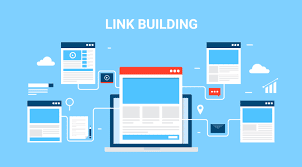 Search Engines like Google and Bing have a complex algorithm in which they rank your website compared to your competitors. This article focuses on the importance of a link building strategy for dental websites.