Feb 27, 2025 | Google, marketing, Small Business
Local SEO: The Importance of Responding to Google Reviews
In today’s digital landscape, online reviews have become a cornerstone of consumer decision-making.
For local businesses, Google Reviews not only influence potential customers but also play a pivotal role in local search engine optimization (SEO).
Engaging with these reviews—both positive and negative—can significantly enhance a business’s online visibility and credibility.
The Role of Google Reviews in Local SEO
Google’s algorithms consider various factors when determining local search rankings, and customer reviews are among the most influential. Responding to Google reviews has a plethora of benefits. For the consumers benefit as well as Google’s algorithm.
According to a study highlighted by Bird Marketing, reviews account for approximately 15.44% of the ranking factors for local SEO.
This underscores that businesses with a higher volume of positive reviews are more likely to appear prominently in local search results. (bird.marketing)
Moreover, Google itself emphasizes the importance of reviews.
The Google Business Profile support page advises businesses to interact with customers by responding to reviews, stating that such engagement demonstrates value for customer feedback and can improve business visibility. (support.google.com)
Benefits of Responding to Google Reviews
-
Enhanced Visibility
Active engagement with reviews signals to Google that your business is responsive and customer-focused, which can positively influence local search rankings.
-
Building Trust and Credibility
Responding to reviews, especially negative ones, shows potential customers that you value feedback and are committed to addressing concerns. This transparency fosters trust and can sway undecided consumers in your favor.
-
Encouraging More Reviews
When customers see that a business takes the time to respond to feedback, they are more inclined to share their own experiences, leading to an increased number of reviews and a more robust online presence.
Best Practices for Responding to Reviews
-
Timeliness
Aim to respond to reviews promptly. A swift response indicates attentiveness and dedication to customer satisfaction.
-
Personalization
Address reviewers by their names and reference specific points they made. This personal touch shows genuine engagement.
-
Professionalism
Maintain a courteous and professional tone, even when addressing negative feedback. Avoid defensive or confrontational language.
-
Actionable Solutions
For negative reviews, offer solutions or steps to rectify the issue. This demonstrates a commitment to continuous improvement and customer care.

Engaging with reviews doesn’t just enhance online visibility; it also has tangible effects on a business’s bottom line.
A study cited by Chatmeter revealed that hotels responding to reviews experienced a 12% increase in review volume and a 0.12-star rating boost.
This correlation suggests that active review management can lead to improved customer perception and increased patronage. (chatmeter.com)
Furthermore, the Harvard Business Review found that a one-star increase in a Yelp rating can lead to a 5-9% increase in revenue.
While this statistic pertains to Yelp, it underscores the broader principle that higher ratings and proactive engagement can directly influence consumer behavior and, consequently, business performance.
Case Study: How a Local Dental Practice Boosted Visibility & Revenue Through Review Engagement
Background:
A mid-sized dental practice in Austin, Texas, was struggling to attract new patients despite having a well-optimized website.
Upon conducting an audit of their online presence, it was revealed that while the practice had over 100 Google Reviews, they had never responded to any of them. Thus began their journey of responding to Google Reviews timely and often.
Action Plan:
The practice implemented a structured review response strategy:
- They began responding to every new review within 24 hours.
- Negative reviews were handled professionally, offering patients the opportunity to resolve concerns offline.
- Positive reviews were acknowledged with gratitude and personalized responses.
- They encouraged satisfied patients to leave reviews via follow-up emails.
Results (Over 6 Months):
- Google Business Profile rankings improved from #9 to #3 for key local search terms like “best dentist in Austin”.
- Review volume increased by 35%, as more patients left reviews after seeing the practice engage with existing ones.
- Click-through rate (CTR) on Google Business Profile increased by 42%, leading to more appointment bookings.
- Revenue grew by 18%, attributed to a steady influx of new patients from local searches.
This case study highlights how active engagement with reviews can improve search rankings, boost customer trust, and drive measurable business growth.
Implementing an Effective Review Response Strategy
To harness the benefits of review engagement:
-
Monitor Reviews Regularly
Utilize tools or assign team members to keep track of new reviews across platforms. Regular monitoring ensures timely responses and helps in identifying recurring feedback themes.
-
Develop Response Templates
While personalization is key, having basic templates can ensure consistency in tone and structure, making the response process more efficient.
-
Empower Your Team
Train staff on the importance of reviews and equip them with the skills to respond appropriately. Empowered employees can act swiftly and effectively in managing customer feedback.
-
Encourage Customer Feedback
Proactively ask satisfied customers to leave reviews. Positive feedback not only boosts ratings but also balances out occasional negative reviews.
Key Takeaway
In the realm of local SEO, responding to Google Reviews is more than a courtesy—it’s a strategic imperative.
By actively engaging with customer feedback, businesses can enhance their online visibility, build trust, and drive growth.
In an era where consumers heavily rely on online reviews, your responsiveness can set you apart from the competition and position your business for sustained success.
Jan 7, 2025 | Google, Search Engine Optimization
Understanding Google Search Volatility: What It Means for Your Business
In the dynamic world of digital marketing, change is the only constant—especially when it comes to Google’s search algorithm. Businesses relying on organic search traffic know how crucial it is to stay ahead of updates, fluctuations, and trends in Google’s search behavior. At Harris & Ward, we’re committed to helping our clients navigate these changes effectively.
If you’ve been noticing recent fluctuations in your website’s rankings, you’re not alone. Google search volatility has been a hot topic in the SEO community, with many marketers turning to tools like SEMrush to track and analyze these shifts.

What is Google Search Volatility?
Google search volatility refers to the measurable fluctuations in search rankings across various industries and keywords. This volatility often signals an algorithm update, either planned or unannounced. These updates can reshape search engine results pages (SERPs), leading to significant gains or losses in visibility for businesses.
The Current State of Search Volatility
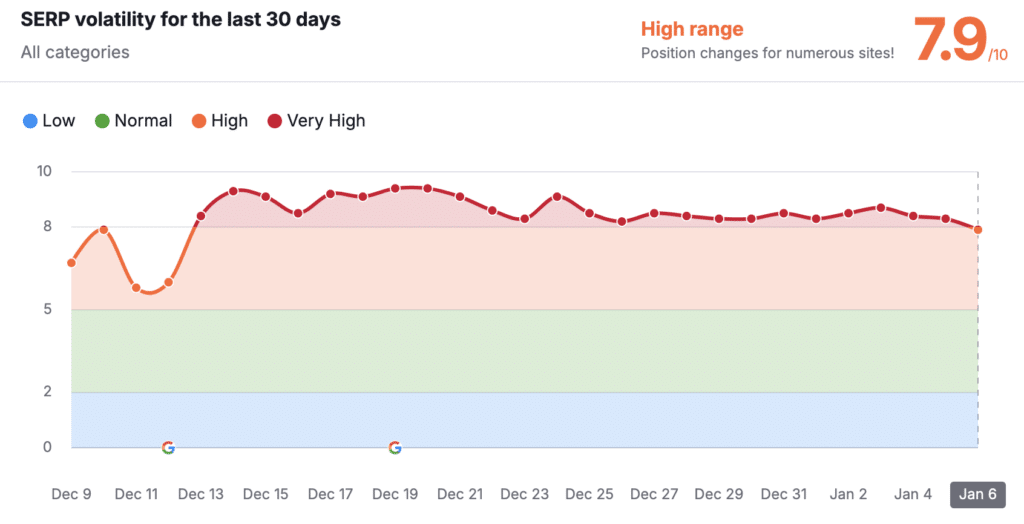
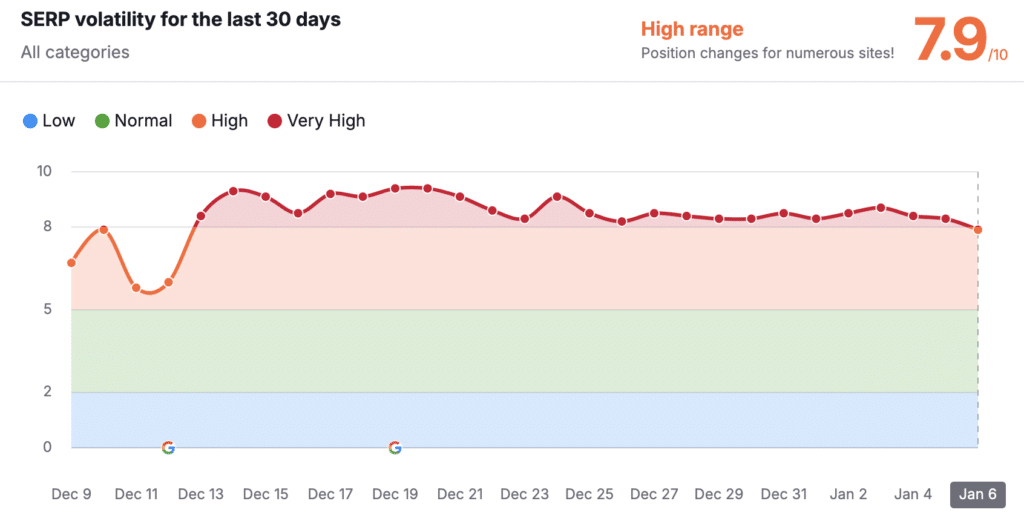
According to recent data from SEMrush’s Sensor tool, the level of volatility in Google’s search results is unusually high. Below is a screenshot showcasing the latest trends:
[Insert Screenshot Here: SEMrush Screenshot Highlighting Volatility]
This spike in activity could indicate algorithm updates, seasonal trends, or even a shift in user search behavior. Regardless of the cause, businesses must adapt their strategies to maintain or improve their online visibility.
Key Causes of Google Search Volatility
- Algorithm Updates: Google’s regular algorithm updates—from broad core updates to niche adjustments—often result in volatility. Recent updates have focused on content quality, site performance, and user experience.
- Seasonality: Search trends can fluctuate based on the time of year. For example, the holiday shopping season typically sees increased competition for retail-related keywords.
- Competitor Activity: Changes in a competitor’s SEO strategy—such as launching new content or earning high-quality backlinks—can also contribute to shifts in rankings.
- Google’s Testing: Google frequently experiments with new features, layouts, and ranking signals, which can temporarily impact search results.
Why Search Volatility Matters for Your Business
Search volatility isn’t just a number on a graph; it has real-world implications for businesses:
- Traffic Fluctuations: Rankings changes can lead to sudden drops or surges in website traffic.
- Revenue Impact: For e-commerce businesses, even slight ranking drops can translate to significant revenue losses.
- Content Strategy Adjustments: Volatility may signal the need to revisit and optimize your content.
How to Respond to Search Volatility
- Monitor Your Rankings: Use tools like SEMrush, Ahrefs, or Google Search Console to track changes in your rankings. Understanding what’s happening is the first step toward addressing it.
- Focus on High-Quality Content: Google’s updates consistently prioritize content that is relevant, authoritative, and user-focused. Regularly update your website with fresh, valuable content.
- Improve Site Performance: Page speed, mobile-friendliness, and overall usability are critical ranking factors. Ensure your website meets Google’s performance standards.
- Diversify Your Traffic Sources: Relying solely on organic traffic is risky during periods of high volatility. Invest in paid ads, email marketing, and social media to balance your traffic.
- Leverage Local SEO: If your business serves a local audience, prioritize local SEO strategies. Optimize your Google Business Profile, build local citations, and encourage customer reviews.
Insights from Industry Experts
To provide further context, we’ve gathered insights from SEO industry leaders:
- Marie Haynes notes that content quality and expertise are becoming increasingly critical ranking factors.
- Barry Schwartz emphasizes the importance of staying agile during algorithm updates and using historical data to identify patterns.
- John Mueller (Google): Recommends focusing on long-term SEO strategies rather than reacting impulsively to short-term ranking changes.
- SEMrush Sensor: Tracks daily SERP fluctuations across industries and provides a volatility score.
- MozCast: Visualizes Google algorithm activity and highlights potential updates.
- Rank Ranger: Offers in-depth insights into ranking shifts and helps identify trends.
- Google Search Console: Provides direct data from Google about your website’s performance in search results.
Proactive Strategies for 2025
As we look ahead, staying proactive is essential. Here are some strategies to future-proof your SEO:
- E-A-T (Expertise, Authority, Trust): Build your website’s credibility by showcasing expert content and earning high-quality backlinks.
- Core Web Vitals: Ensure your website passes Google’s metrics for loading, interactivity, and visual stability.
- AI-Driven Optimization: Use AI tools like ChatGPT to enhance content creation and keyword targeting.
- Voice Search Optimization: Adapt your content for conversational queries to capture voice search traffic.
Harris & Ward’s Approach to Navigating Volatility
At Harris & Ward, we’re no strangers to the challenges of search volatility. Here’s how we help our clients thrive:
- Data-Driven Analysis: We use tools like SEMrush to identify patterns and opportunities.
- Custom SEO Strategies: Our tailored plans ensure that your website remains competitive.
- Content Excellence: We prioritize creating high-quality, optimized content.
- Transparent Communication: We keep our clients informed about changes and recommended actions.
Conclusion
Google search volatility is an inevitable part of digital marketing, but it doesn’t have to derail your business. By staying informed, investing in quality strategies, and partnering with experts like Harris & Ward, you can turn volatility into opportunity. If you’re ready to secure your online presence and drive results, schedule a complimentary strategy call with us today.
Sep 17, 2024 | Dental Marketing, Google
Mastering Dental Ads: Fun Examples and Top Platforms for Dentist Advertising Success
In today’s competitive dental market, standing out is key to growing your patient base. While word of mouth still holds value, the digital and physical advertising world is where dental practices truly shine. Whether it’s a sharp dental ad on Google, a cleverly crafted dentist ad on Meta (formerly Facebook), or even community engagement via direct mail, modern dental advertising is full of creative possibilities. So, let’s dive into the wild world of dental advertising agencies, innovative ad campaigns, and the platforms that can help take your practice to the next level!
Why Dental Ads Matter More Than Ever
In an era where patients have endless choices for healthcare providers, dental advertising has become essential. Gone are the days of just relying on a yellow pages listing or signage in front of your practice. Today, savvy dentists use ads to:
- Attract new patients: Targeted ads on platforms like Google and Meta make it easier to reach those actively seeking dental care.
- Build brand recognition: With ads across multiple platforms, you can ensure your practice is top-of-mind when someone is searching for a dentist.
- Promote special offers: Want to fill gaps in your schedule or promote a new service? Dental ads give you an immediate reach to spread the word.
Example:
Dr. Smiles, a pediatric dentist in Chicago, created a playful video ad on Meta showing kids conquering their fear of the dentist. The ad featured colorful graphics and catchy music, helping the practice go viral in the local community. The result? A 20% increase in patient inquiries within a month!
Google Ads: The Search Engine Powerhouse
When people search for a “dentist near me” or “teeth whitening,” your practice needs to show up. That’s where Google Ads come in.
Google Ads allow dentists to target potential patients by geographic location, age, and even their search behavior. With pay-per-click (PPC) ads, you’re only paying when someone clicks on your ad, making it a cost-effective way to grow your practice. You can also set up Google Display Ads that show visually appealing ads across a wide network of websites.
Fun Tip:
Include a call to action like “Book today for a free consultation!” to encourage clicks.
Example:
Dr. Clean Teeth ran a Google Ad campaign targeting “emergency dental services” in his city. He noticed a significant uptick in patients needing urgent care, and his practice saw a 30% increase in new emergency appointments.
Meta Ads (Facebook & Instagram)
Meta’s advanced targeting allows you to reach potential patients based on demographics like age, interests, and location, making it an excellent platform for dental ads. Creating visual or video content helps grab attention, especially on Instagram. A compelling dentist ad can be as simple as a before-and-after photo of a patient’s smile after whitening or orthodontic treatment.
Fun Tip:
Try using Facebook polls or Instagram stories to engage with your audience. A question like “When was the last time you had a dental cleaning?” can get people thinking about their next appointment.
Example:
A dentist in New York City used Instagram Stories ads to show short videos of teeth cleaning processes. Paired with a fun “Swipe Up to book!” feature, they saw a 25% increase in hygiene appointment bookings.
Direct Mail: Going Old School
Don’t underestimate the power of a well-designed postcard in the mailbox. Direct mail advertising can target specific neighborhoods or demographics, ensuring that the right people are seeing your ad. While it might seem outdated, direct mail still resonates, especially when paired with a limited-time offer or an engaging visual.
Fun Tip:
Design your direct mail ads to be interactive! Include a cut-out coupon or an appointment reminder magnet for the fridge to keep your practice top-of-mind.
Example:
Smile Town Dental sent out postcards to local families, offering $50 off their first visit. They included fun dental facts for kids and a removable sticker that said, “I Love My Dentist!” They saw a 15% increase in new patient appointments in the following months.
Community Engagement: Building Trust Locally
Beyond online platforms, sponsoring local events, youth sports teams, or health fairs is a great way to engage with your community. These types of ads build your brand’s reputation and trustworthiness.
Fun Tip:
Sponsor a local “smile booth” at community events where attendees can take pictures with fun dental props, which also gets shared on social media!
Example:
Happy Smile Dentistry sponsored a local 5K, providing free dental kits and a branded water station. They also hosted a social media contest where participants could win a free teeth-whitening session by posting race-day photos with the hashtag #HappySmile5K.
Working with a Dental Advertising Agency
Many dental practices opt to work with a dental advertising agency to take their marketing efforts to the next level. These agencies specialize in creating targeted campaigns, managing ads, and optimizing performance. Working with experts saves time and can lead to better results.
A dental advertising agency can handle all the heavy lifting—from creating eye-catching Google and Meta ads to designing direct mail campaigns that convert. They can also provide analytics, helping you adjust strategies for even greater success.
Example:
Bright Smiles Dental worked with a dental advertising agency to create a robust cross-platform ad strategy. Their agency ran Google Ads targeting patients searching for cosmetic dental services while simultaneously running video ads on Meta. The result? Their cosmetic services doubled in appointments within six months.
How to Create Effective Dental Ads
Creating effective dental ads is a combination of targeting the right audience, crafting engaging content, and optimizing for the platform. Here’s how to make sure your ads stand out:
- Clear Call to Action: Every ad should tell the viewer what to do next. Whether it’s “Book Now,” “Schedule Your Free Consultation,” or “Learn More,” a clear call to action is key.
- Engaging Visuals: Use high-quality photos or videos to grab attention. Consider showing before-and-after shots or patient testimonials to make your ad feel personal.
- Compelling Offers: Special offers like discounts on first-time visits or free consultations can motivate people to act.
Example:
A pediatric dentist in California ran a series of Google Ads with a unique selling proposition: “Kids under 3 get their first dental visit for free!” Paired with engaging visuals of smiling children, these ads resulted in dozens of new patient appointments every week.
There’s no one-size-fits-all when it comes to dental advertising. Successful practices use a combination of platforms, including Google Ads, Meta, direct mail, and community engagement to reach their audience. Whether you’re creating fun and engaging content for social media or relying on a dental advertising agency to optimize your campaigns, the key is to diversify and measure success to maximize your return on investment.
Call to Action:
Need help creating dental ads that convert? Contact us today for a complimentary strategy call and let us help grow your practice with a multi-platform approach tailored to your goals!
Jul 24, 2024 | Google, Small Business
Local SEO: Unlocking the Full Potential of Your Google Business Profile
As a seasoned marketer specializing in digital arenas, I’ve seen the profound impact that a well-optimized Google Business Profile can have on local businesses. It’s more than just adding your address; it involves strategically populating every relevant field to enhance your visibility and ranking on Google. Today, I want to explore how enriching your Business Profile can transform your local SEO efforts.
The Importance of Comprehensive Data Entry
The core of enhancing your Google Business Profile lies in the completeness of the information you provide. A fully detailed profile does more than inform potential customers—it significantly increases your chances of ranking higher in search results. As noted by SEO expert Miriam Ellis, certain fields on your profile weigh more heavily than others when it comes to improving your local search ranking.

Key Fields That Impact Your Local SEO
- Office Hours: It may surprise some, but your listed office hours can affect your search visibility. Studies have shown that businesses might experience a drop in ranking when they are closed. This implies that indicating your operating hours not only helps customers know when to visit or call but also stabilizes your visibility during off hours.
- Reviews: Customer reviews are the lifeblood of local SEO. The quantity, quality, and recency of reviews all play critical roles. A higher overall star rating and a steady influx of positive reviews enhance trust and encourage more customer interactions. Furthermore, how quickly you garner reviews (“review velocity”) can signal to Google the current relevance and popularity of your business.
- Attributes: Adding specific attributes that describe additional offerings can be a game changer. For instance, attributes like “Offers online appointments” or “Provides onsite services” cater to the growing demand for convenience and personalized service, making your business stand out in local searches.
- Services: Google allows you to list services you provide directly on your profile. I recommend adding all relevant services suggested by Google and considering the addition of custom services unique to your business. This not only aids in matching user queries more effectively but also positions your profile as comprehensive and detailed.
- Products: For businesses that sell products, integrating with Google’s Merchant Center enables your products to appear in rich search results, enhancing visibility and potentially boosting sales directly from the search page.
Additional Insights
While you can’t directly set “popular times,” this automatically generated data by Google is worth understanding. It reflects the foot traffic of your business and is particularly relevant if you operate a physical location like a restaurant or retail store. This information can help potential customers decide when to visit and can indirectly influence your profile’s attractiveness.
Strategic Advice for Business Owners
When optimizing your Google Business Profile, it’s crucial to only include accurate and relevant information. This integrity not only respects the intelligence of your customers but also aligns with Google’s guidelines, which can favor your business with better rankings and more positive interactions.
Remember, successful local SEO is about making a series of informed decisions. While there’s always an element of unpredictability in how rankings fluctuate, a thorough and honest approach to your Business Profile can set you up for sustained visibility and growth.
In conclusion, optimizing your Google Business Profile is not just a task—it’s a strategic endeavor that requires attention to detail and an understanding of what makes your business unique. Harness the power of each field to tell your compelling story, meet customer needs, and climb the ranks in local search results. It’s a journey of good decisions, smart data usage, and sometimes, a bit of luck.